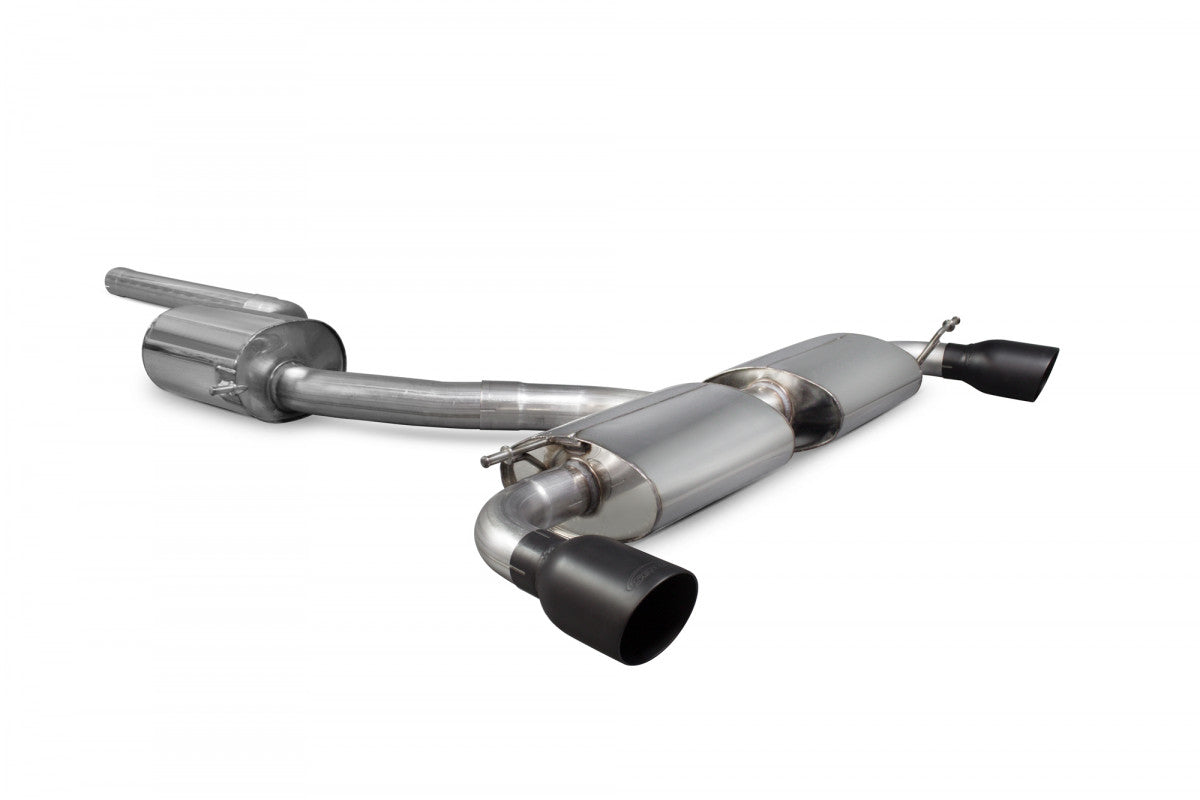
The Scorpion Resonant Cat-Back System The Scorpion exhaust system is specifically designed for the Volkswagen Scirocco R, which was produced from 2009 to 2017. This high-performance exhaust system has a diameter of 76 mm / 3" and is made of premium T304 stainless steel, ensuring excellent durability and performance. With its CNC curved design, the system promotes maximum exhaust gas flow, resulting in improved performance and a sporty sound experience. The Scorpion system is available in both resonated and non-resonated versions, so you can choose based on your preferred sound level. The system not only offers a performance improvement, but also reduces weight compared to the original exhaust system, which is an important factor for better performance. In addition, the system is equipped with an acoustically developed muffler that ensures a pleasant sound experience without unwanted drone throughout the entire rev range. The Volkswagen's aesthetics are further enhanced by the option to choose from three stylish tailpipe finishes: Polished Daytona, Carbon Ascari, or Black Ceramic Daytona. These options allow drivers to professionally customize the look of their car. while maintaining build quality and performance. For Volkswagen owners who want to maximize the Scorpion's performance, the Predator system option is also available. This system significantly improves exhaust gas flow compared to the OEM values and delivers a powerful engine note that unleashes the unmistakable Scorpion sound. Please note that this system is intended for closed-circuit use only.
Advantages:
• Reduces weight compared to the original system
• Available in resonated or non-resonated options
• Low-noise design prevents drone at all speeds
• Choice of three exhaust styles: Polished Daytona, Carbon Ascari, Black Ceramic Daytona
• Flexibility to upgrade in phases with OEM compatible flange mounting
Contents:
• Scorpion Resonant Cat-Back System
• Mounting material
Installation Instructions
Installation Instructions
Installation Instructions
Installation Instructions